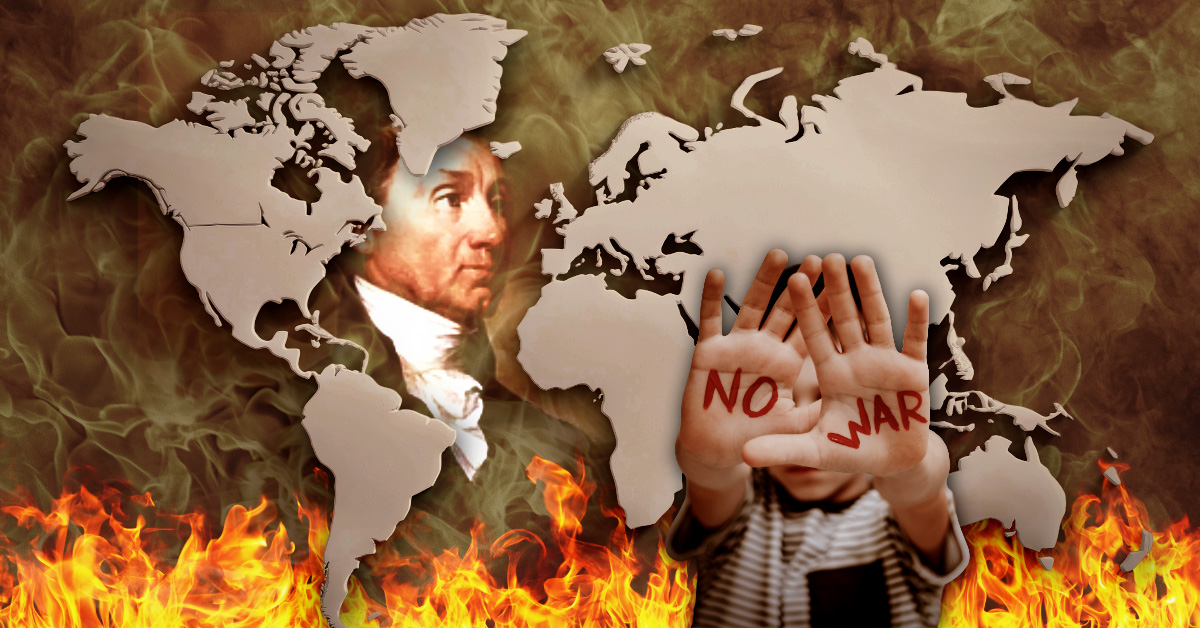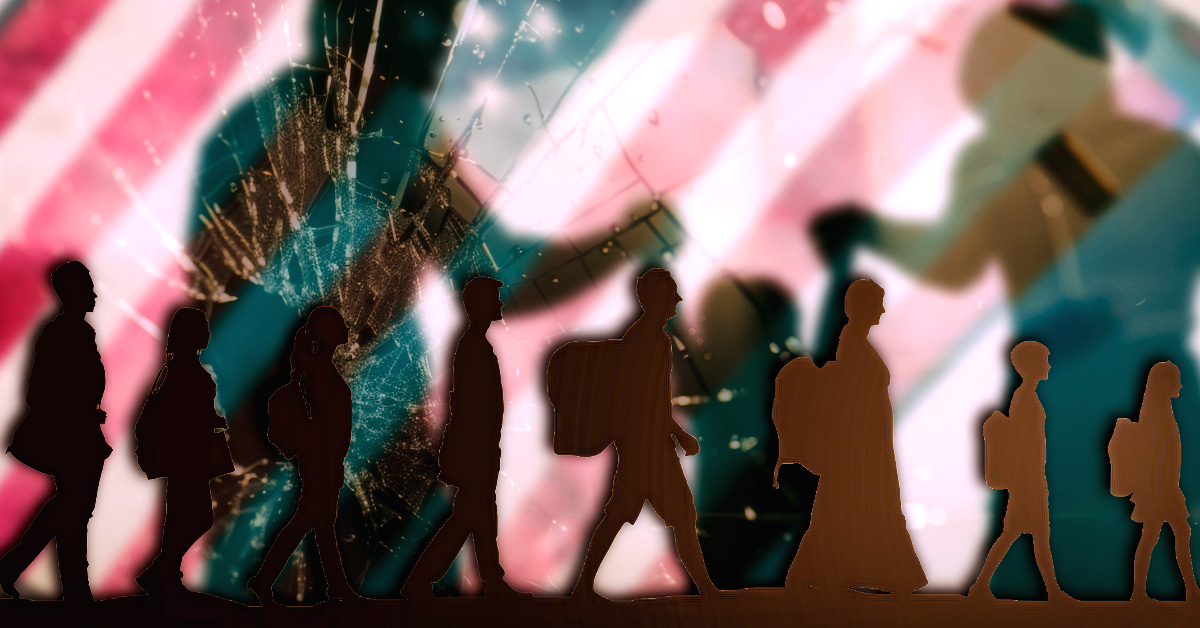
Immigration gets weaponized when those who get hot-headed about it do not understand the process, nor the reason why people leave behind the place they used to call home. This is not only about US immigration — there is always a lot more to the story.
Expat vs. Visitor: Each Story is Unique
Here is a sad reality: Most people who are opposed to any immigration have very little experience outside their own limited bubble, even if they had a stint traveling abroad or outside their local area. For any of us, it is easy to imagine the outside world a lot differently when all you know is secondhand experience. And yes, that even includes if you traveled abroad as part of a touring agency, a cruise, or even a military deployment.
When you travel abroad, there is a huge difference between what is intended for "visitors to see" and the "real local situation." Depending on where you go, the levels of control vary. For example, those visiting North Korea see a curated, staged version of reality — an illustrated utopia that, unless you're exceedingly naive, makes your eyes roll to the back of your skull. The Soviets used to do the same thing — allowing dignitaries to see the "stability of communism" while hiding the starvation just a few kilometers down the road.
As a US Navy Sailor, whenever we had port visits, we had restrictions about where to go and what was off-limits — even in American cities. Just because a person took a “Disney Cruise” does not mean they "truly experienced the foreign culture." The experience is vastly different for a Sailor stationed abroad, commuting with locals and visiting places that aren't just "tourist areas," compared to someone on a leisure vacation.
I've been to every continent except Antarctica. I have lived abroad and around the USA — and yes, I have encountered culture shock abroad and even back in the very place I was born years later. The world is a dynamic place, even in cultures that many erroneously consider monoliths.
I have met wonderful people from more than 120 countries. Each conversation was unique; each experience was eye-opening. And newsflash: a lot of these folks were expats serving in military uniform onboard the very same US warships where I was serving our great country. Sadly, those Sailors had no shortage of stories about people wearing the same uniform who discriminated against them. I've experienced it myself — for example: perpetrators who often did not understand how offensive their words were. We expats often diffuse the situation because "we've seen that movie before — a lot — and it ain't pretty." Yet when those same people were abroad, they were the ones complaining that these foreign lands were "not like the United States." Figures.
Leaving Home and Starting Anew
The reasons why people emigrate are as diverse as the people themselves. The process to come to the USA is exceedingly complex, expensive, and extremely lengthy. Because of this, there are entire industries around immigration. I'll tell you a few of those stories soon. But newsflash: it is also complex, expensive, and lengthy immigrating to other countries as well.
People who emigrate to the USA do not necessarily do it because it is the "best option" for them (sorry if you're American and that hurts your feelings). But the USA is the only country on the planet that represents every other country, culture, and ethnicity. That is what makes America the premiere nation — it combines the best every culture brings to the collective. Diversity is indeed a strength; only idiots claim otherwise because they have become victims of their own grandiosity and ignorance.
Quite frankly, folks tend to emigrate to wherever is geographically easier. Setting up a new home is expensive and takes time. I know that firsthand; Mother Navy shifted me from Florida, to Hawaii, to Italy, and finally to Virginia — where fortunately my wife, daughter, and I settled for good. We still love traveling; in fact, as I type this, we are in a beautiful Air-B&B visiting an old friend.
Home becomes wherever your heart finds happiness. My home is wherever my wife and daughter are. It’s more subjective than folks realize. Some folks lost their home because it was sold, destroyed, or compromised. The world is not always a happy place. You can have people bathing in champagne in one town, and a couple of miles down the road, someone might be threatened at gunpoint after a 12-hour shift.
Forced to Leave Everything Behind
Now imagine if you were forced to leave the place where you built a life. I am not talking about undocumented immigrants; I am talking about circumstances beyond your control.
Many of us in the military understand that. We forge memories, then our tour ends and we end up on opposite sides of the planet. Military children understand that sacrifice as they move whenever their parents are reassigned. It is hard, even though the military ships your household goods and vehicle (even if they sometimes arrive broken or not at all).
But what if you were forced to leave with only the clothes on your back and a small bag? That is the reality for millions because of unspeakable violence. The only options are escape or die — often after enduring sustained brutality from drug lords, gangs, or warmongers.
Immigrating "The Right Way"
Newsflash: asking for asylum if you are at risk of being killed or brutalized is "the right way." Immigration requirements for the USA are extremely hard. It can take years, if not decades, to move as a Permanent Resident (Green Card). Don't take my word for it; look it up and pretend you're escaping a place where you and your children are being brutalized. The perpetrators are returning at midnight — so be ready.
US Official Resource: You can see the complexity for yourself at the website.
And for those who think so-called "illegal aliens" come to cast ballots for the Dems: Only US citizens can vote. Period. It’s a process that is exponentially hard. Non-citizens are never allowed to vote. That's not a thing. If you believe that, you're extremely naive. Not even Green Card holders can vote — a status that takes years of vetting to attain. Don't get mad at me; get mad at whomever lied to you and considered you were stupid enough to believe them.
When you see "caravans," it is because there is safety in numbers for those traveling on foot through unspeakable danger. Put yourself in their shoes. Remember, you only have what you can fit in a backpack because your money has been frozen and you've left everything you've ever owned behind — not because you want to, but because you had no choice. It’s like your house collapsed in a hurricane, except people are holding you at gunpoint, there is no insurance, so you cannot rebuild. Everything you own, every heirloom, and every memento would be left behind - forever.
A Thought Exercise for the Empathy-Challenged
Let's pretend you live in rural America and you’ve saved for years to visit Paris, France — a childhood dream. The closest embassy is in the state capital. You live so far away you need to get lodging or somewhere to stay the night. You have to be in the line outside the embassy at 5:00 AM with your wife and two kids, dressed as nicely as possible.
You have all the requirements: passports, prepaid tickets with return dates in case you get denied, proof of income, and proof you can spend about $300 per person, per day. You have to disclose every cent in your bank accounts and show your property assets just to prove you "won't overstay."
When you arrive, a law enforcement rep with a bad attitude treats you like an asshole in front of your family, emasculating you. After hours of waiting, a condescending person with a barely legible accent of your mother tongue behind bulletproof glass treats you like shit, interrupts you, and asks extremely personal questions within earshot of the room. Despite you having all the documents and paying a fee equal to two months of salary, he decides something pissed him off. He flips to the last page of your passport and slams a ruby-red "DENIED" stamp. You can't return for a year. That non-refundable application fee — two months of your life’s work — is gone. Would that make you angry? It should.
A Story Most Expats Won’t Tell You
That scenario is often the reality for those who come to the USA have witnessed or lived themselves — we just don't talk about it. Today I am a US citizen and a US Navy Veteran, but I arrived with a Green Card after my mother tried for years to reunite her children. My childhood memories are filled with legal tribunals and immigration courts. The first time we tried getting a visa as kids, we were denied. We could only see our mother for a couple of weeks every few years while she was here on a working visa.
I remember that moment in the American Embassy like it was yesterday. I saw the man at the window being emasculated in front of his family with my own eyes. The wife was wearing a red sweater and the little boy around my age was wearing a pretty cardigan; the daughter, younger than my brother, had her long hair in a pretty braid and red laces. The man was wearing a dark blue suit. I was about 8–9 years old. My grandmother had dressed us up nicely, ensuring we chose our outfits the night before to make a good impression. Yet our swift denial took less than three minutes and meant our family remained separated for eight more years.
When we finally arrived in the USA, I was 16. I saw similar scenes eight years later in the city where we went to get our paperwork. We had to catch a plane because it was so far away, staying in a friend-of-a-friend’s house. By the time we finally had our paperwork completed and were united as a family, half of my life had already passed — like a blur.
Becoming an American Citizen
After several years with a Green Card, I became a citizen in 2008. I had already been in the Navy since 2003 — the process was long because deployments kept moving the paperwork to the right. Today, I'm a proud United States Navy Veteran. My love for the USA is undeniable, but I saw what I saw. You can’t "suddenly forget" those scenes.
Even when we arrived at Miami International Airport to restart our lives, our welcome was less than amicable. The immigration officer threatened to send us back because she was lousy at her job, looking for a document that was right there in my brother's envelope. She eventually acknowledged her mistake, but only after a very tense moment with my mother.
My mom passed away almost a decade ago, but her sacrifice took so many years. I can only imagine what it would have been like if, instead of our big house, we were living in a place where we had to pay "tax" to violent thugs.
The Root of the Problem
If immigration enforcement is based on cruelty, it is also worth asking: why are the countries people flee so dangerous? Often, it is because of drugs. The problem exists because there are consumers in the USA who pay top dollar for them. Drug cartels thrive because there is a market. It is that simple.
Look at yourself in the mirror. Now take away your fancy clothes, your shower, everything you own, including your savings. As you struggle to regain your human dignity, think about those who celebrate if you're "put in your place." With a potential global conflict nearing, any of us could be that person.
I hope this story brings some clarity during these dire times. It is easy — and despicable — to kick those who are down. That’s the coward’s way. It takes courage to put yourself in someone else's shoes. It takes even more courage to succeed after enduring a total forced reset of your life. Fixing immigration is complex because it requires understanding the human factor. "Building a wall" is easy, but it doesn't answer why people leave all they ever loved in the first place. It won't stop them. Resolve that query, and finally, the solution will follow. And yes, I’ll write more about this important topic that is too often misunderstood. BZV
 About the Author: J. Marcelo "BeeZee" Baqueroalvarez
🔗 Connect & Learn More: Visit Marcelo's comprehensive landing page for his extended bio, social links, consulting form, and more.
J. Marcelo "BeeZee" Baqueroalvarez is the Founder of Half Life Crisis™, a unique father-daughter collaboration dedicated to the relentless pursuit of intellectual honesty, critical thinking, geopolitical strategy, and meaningful art. Marcelo is the recognized author of the essential reads, Authoritarianism & Propaganda and Woke & Proud, driving challenging conversations worldwide. When not publishing, Marcelo utilizes his strategic insight in technology and business as the founder of BeeZee Vision, LLC™, which includes BZVweb™ Automated Web Services and Info in Context™ strategic consulting.
Continue the Conversation
We encourage intellectual debate! To maintain a clean, focused reading experience, comments have been disabled on this article. Share your insights, counterarguments, or continue the discussion on your preferred social platform: