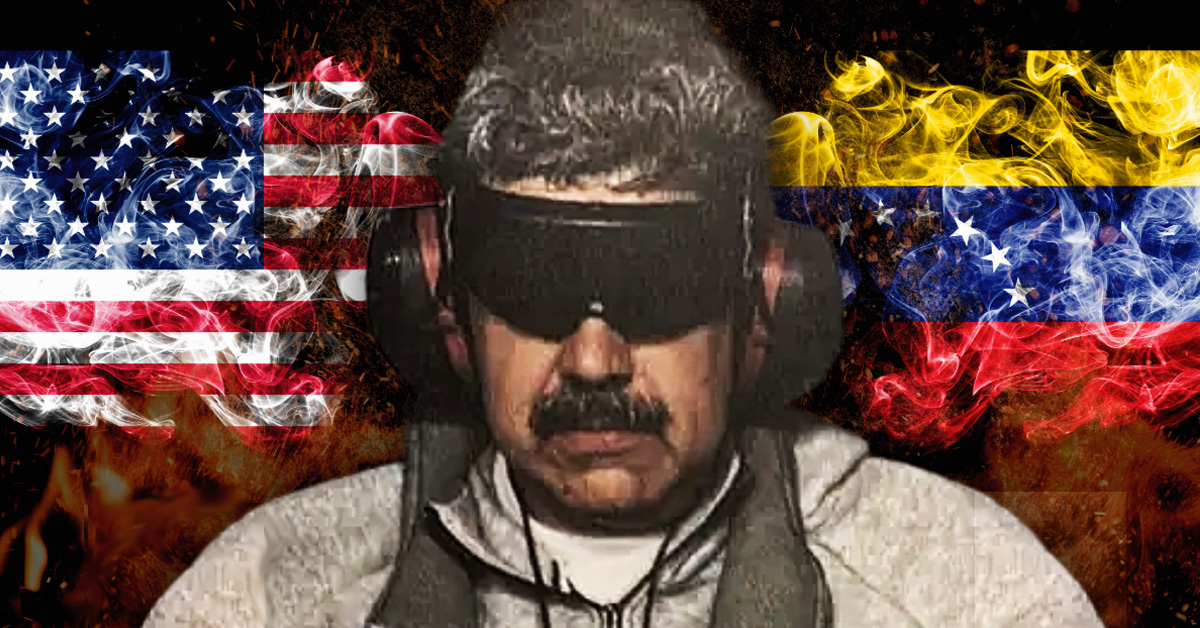
Maduro’s capture ends years of suffering, yet the US operation raises legal and constitutional alarms. BZV analyzes the Caracas pivot and regional fallout.
The Caracas Pivot:
Geopolitical Implications of the 2026 Venezuela Intervention
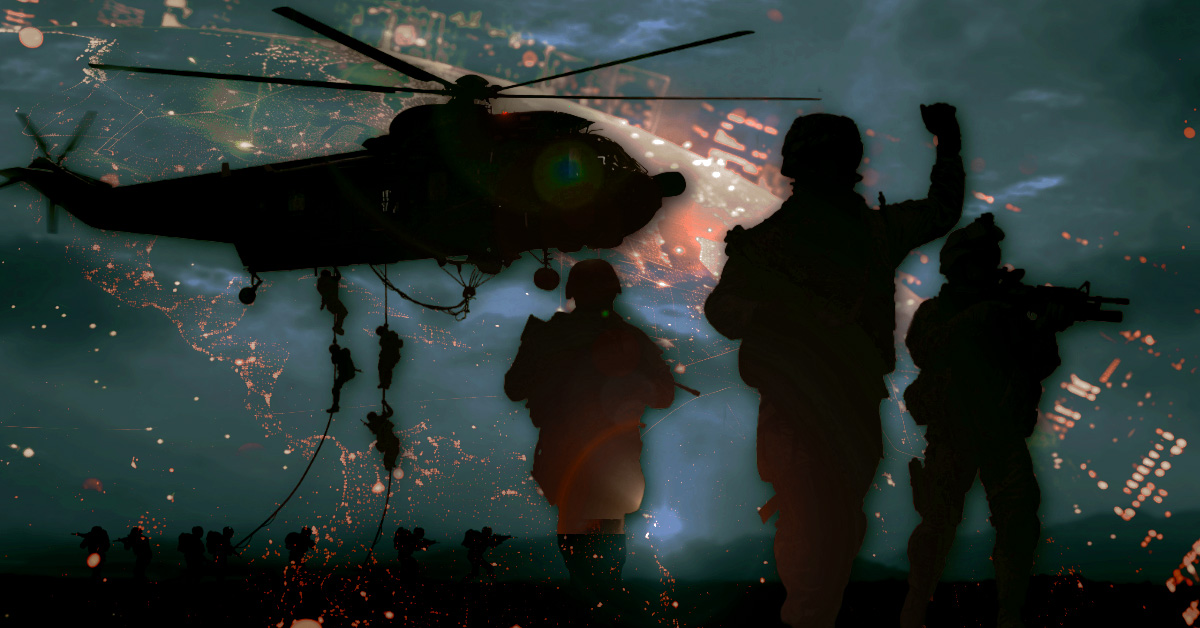
The events of January 3, 2026, represent a massive shift of the Western Hemisphere’s security landscape. As a retired US Navy Intelligence Analyst, I have spent decades assessing "indicators and warnings" — and for months, the "red flags" regarding a direct move on Caracas were reaching a boiling point. What happened is not surprising to me, but it does not mean it was the correct course of action.
Two things are true simultaneously: Nicolás Maduro is a brutal dictator who has inflicted sustained suffering on the Venezuelan people, and this US operation is considered illegal under international law while lacking the constitutionally required Congressional approval.
The US produces "light-sweet" crude, but our refineries are calibrated for the "dark, goopy, heavy" crude found in Venezuela, Canada, and Nigeria. This is why the control of Venezuelan infrastructure is the "crux of the issue" for global markets.
While some assess a five-year window for infrastructure repair, our assessment at BZV is that major corporations will corner this market and update defunct systems in record time to capitalize on the proximity of these wells to US refineries.
The Legacy of Authoritarianism:
Vacuum and Insurgency
History shows us that removing a dictator by force is only the first — and easiest — step. The human factor and cultural nuance are where "regime change" typically fails. From the "Chavismo" ideology to the anti-American sentiment fueled by the "Imperio Yankee" narrative, the sociocultural quagmire in Venezuela is deep.
When you pull a leader by force, you risk creating an insurgency that survives long after the initial strike package. We've seen this before, I anticipate seeing something similar geopolitically speaking as the aftermath.
A Gift to Global Adversaries
Bravado is not a strategy. By bypassing Congressional authorization and international law, the US has provided a "legal" template for our adversaries. Russia and China can now cite "The Caracas Precedent" to justify their own unilateral actions in Ukraine or Taiwan.
We must ask: Does this action benefit an adversarial regime? By normalizing military strikes for regime change, we isolate ourselves from bilateral allies and hand a propaganda victory to the very autocrats we seek to oppose. There is a very valid reason why did not seek regime change before.
Is this and Impeachable Offense?
yes, they are as in plural: Whether they realized it or not, this implicates several members of the administration. Remember, there were many career professionals both military and civilian who resigned in the last several months because of Trum's action with Venezuela. Despite opinions o "feelings of approval of disapproval for these actions, National and international statutes were violated by the President, the VP, the Secretary of Defense, and the Secretary of State. This also implicates the Secretary of the Navy and everyone in the tactical chain of command.
National (US) Statute Violations
- The War Powers Resolution of 1973 (50 U.S.C. §§ 1541–1548):
- The Violation: The President is required to "consult with Congress in every possible instance" before introducing US Armed Forces into hostilities. Since no declaration of war or specific statutory authorization exists for a "Regime Change" in Venezuela, this operation bypassed the 48-hour reporting and 60-day authorization window.
- Article I, Section 8, Clause 11 of the US Constitution:
- The Violation: The "Declare War Clause." Only Congress has the power to declare war. Executing a large-scale strike and kidnapping a foreign head of state for "regime change" without a declaration is a direct encroachment on legislative authority.
- Title 18, U.S.C. § 1203 (Hostage Taking Act):
- The Nuance: While the administration labels this a "legal apprehension," if the capture is proved to be part of a non-sanctioned military operation without legal standing (like an extradition treaty being honored), it falls under the illegal seizure of persons on foreign soil.
- The Nuance: While the administration labels this a "legal apprehension," if the capture is proved to be part of a non-sanctioned military operation without legal standing (like an extradition treaty being honored), it falls under the illegal seizure of persons on foreign soil.
International Statute Violations
- United Nations Charter, Article 2(4):
- The Violation: This article prohibits the "threat or use of force against the territorial integrity or political independence of any state." A unilateral strike on a capital city to remove a president is a textbook violation of this core principle of international order.
- The Geneva Conventions (1949) & Additional Protocols:
- The Violation: Common Article 3 and the Fourth Geneva Convention protect "protected persons" and prohibit the use of force to alter the governing structure of a territory. Any civilian casualties resulting from the "large-scale strike" in Caracas would be scrutinized as violations of the principle of distinction and proportionality.
- The OAS Charter (Organization of American States), Articles 19 & 20:
- The Violation: "No State or group of States has the right to intervene, directly or indirectly, for any reason whatever, in the internal or external affairs of any other State." This specifically prohibits military force for the purpose of regime change in the Western Hemisphere.
The BZV Takeaway
It is easy to be a bully; it is easy to drop bombs. It takes actual skill to navigate the world with diplomacy and temperance. BeeZee Vision, LLC™ under Info in Context™ will continue to monitor this developing situation, providing the forensic strategy needed for a complex, high-stakes world.
Full Open0Source Intelligence Brief: For the complete tactical breakdown, the specific list of US statute violations, and our 2026 regional forecast, please visit the Tier 3 Intelligence section on our
 About the Author: J. Marcelo "BeeZee" Baqueroalvarez
🔗 Connect & Learn More: Visit Marcelo's comprehensive landing page for his extended bio, social links, consulting form, and more.
J. Marcelo "BeeZee" Baqueroalvarez is the Founder of Half Life Crisis™, a unique father-daughter collaboration dedicated to the relentless pursuit of intellectual honesty, critical thinking, geopolitical strategy, and meaningful art. Marcelo is the recognized author of the essential reads, Authoritarianism & Propaganda and Woke & Proud, driving challenging conversations worldwide. When not publishing, Marcelo utilizes his strategic insight in technology and business as the founder of BeeZee Vision, LLC™, which includes BZVweb™ Automated Web Services and Info in Context™ strategic consulting.
Continue the Conversation
We encourage intellectual debate! To maintain a clean, focused reading experience, comments have been disabled on this article. Share your insights, counterarguments, or continue the discussion on your preferred social platform:
Facebook • Instagram • LinkedIn